
Guide · Stress and rest
Touch, stress and rest: what massage can — and cannot — do
A slow hour can help you pause. It cannot fix everything, and it does not need to.
The COHEN team7 min read

Massage cannot remove the causes of stress, but a slow one can offer a real pause: an hour of warmth, quiet and attention in which many people feel their shoulders drop and their breathing settle. It is a way to rest, not a treatment, and it is no substitute for medical or psychological care.
That honest middle ground is what this guide is about: why a demanding week settles in the body, what an unhurried ritual can and cannot offer, and how to carry a little of the calm home with you.
01Why everyday stress settles in the body
Stress often shows up in the body before we have a name for it. The shoulders creep towards the ears. The jaw tightens over a difficult email. The breath stays high in the chest, quick and shallow, for most of the afternoon. Public guidance on stress lists muscle tension among its common physical signs.
Much of it is ordinary. Long hours at a screen, a phone that never quite goes quiet, the habit of bracing for whatever comes next. The body stays on standby — useful in a crisis, tiring when it becomes the default.
The first step is simply noticing. Try a quick check now:
- Where are your shoulders: resting, or lifted?
- Are your teeth touching?
- Does your breath reach your belly, or stop at your chest?
Nothing needs fixing in this moment. Sometimes noticing is enough for something to loosen.
02What a slow massage can offer
An unhurried massage offers a handful of simple things, and they are worth naming honestly.
- A pause. For the length of a ritual, your phone is silent and nobody needs anything from you.
- Warmth. Warm water and warm oil invite the body to stop bracing.
- A slower rhythm. Long, even strokes set a pace your breathing can follow, if it wants to.
- Noticing. Many guests describe discovering tension they had stopped feeling — in the shoulders, the jaw, the hands — just as it begins to soften.
Relaxation is not something you have to achieve. If your mind keeps running for the first part of the ritual, that is normal. For many people it slows once the body has had time to register the warmth and the pace.
None of this is treatment. It is closer to other good kinds of rest: a long walk, an early night, an afternoon with nothing planned. What a ritual adds is someone else’s full attention, and a setting made for nothing but calm.
03Regularity and recovery
A single ritual is a pause. A regular one becomes a rhythm: something in the diary that does not depend on finding a free evening. For many people, that predictability is part of the value. You know a slower hour is coming, and the weeks in between can feel a little less relentless.
There is no ideal frequency, and we will not invent one. Choose a rhythm that suits your time and budget — monthly, with the seasons, or at the end of a demanding project. A ritual you can keep is worth more than an ambitious plan you abandon.
Between visits, you can borrow its elements at home: a warm shower taken slowly, ten minutes lying down without your phone, a few long exhales before sleep. They are small, and they add up to a habit of pausing.
A word on recovery. Our rituals are about relaxation; they are not sports massage or physiotherapy. If you have an injury, pain that does not settle or a specific muscular problem, a physiotherapist or doctor is the right first stop.
04Me-time: the case for an hour that belongs only to you
Time for yourself is easy to postpone. There is always a reason: work, family, the feeling that rest has to be earned first. Yet even public advice on coping with stress includes setting aside time for yourself. It is maintenance, not indulgence.
Me-time need not be grand: a walk after work, a morning coffee without the phone. What a ritual adds is that, for its length, someone else takes care of the frame, and all you need to do is be there.
What makes an hour feel like your own is privacy and the absence of demands. At COHEN, appointments are spaced so that you do not cross paths with other guests, and the suite is yours alone for the length of your ritual — more about that on our private spa page. There are no decisions to make and no conversation to keep up. Your therapist leads; you receive.
If one hour is not enough, More attention is built as an afternoon: 160 minutes that begin with a hot, fragrant bath and close with face and feet treatments.
05Feeling at home in your body
Stress tends to move us into our heads: planning, replaying, anticipating. A slow massage turns attention the other way. For a while, what matters is the warmth of a hand on your back, the weight of your own arm, the length of an exhale.
Many guests describe leaving with a different sense of their body — walking more slowly, standing a little easier, in less of a hurry to be somewhere else. We would not promise that. Bodies and days differ, and some rituals are simply pleasant and quiet, which is enough.
What we can describe is what the setting is designed for. Your body is met with attention and care, not assessment, and nobody is judging how you look. For more on why attentive touch matters to so many people, read why touch matters.
To practise at home, try this before sleep: move your attention slowly from your feet to the top of your head and notice where you are still holding on — calves, shoulders, face. Let a little go with each exhale. It does not have to work; paying attention is enough.
06What massage cannot do
It is worth being clear. A massage — ours included — is not a medical treatment or a form of therapy. It cannot diagnose anything, and it does not treat stress, anxiety, low mood, sleep problems, pain or any medical condition. It is not a substitute for medical or psychological care.
Please speak to a doctor, a psychologist or a counsellor if:
- you are struggling to cope with stress, or it has stopped feeling temporary;
- your sleep, appetite, mood or concentration have changed and do not settle;
- you have physical symptoms that worry you, such as chest pain, dizziness or pain that persists;
- you feel low, anxious or overwhelmed on most days.
If you ever feel unsafe or in crisis, call 112, the European emergency number.
A ritual can sit alongside professional care — as rest, not instead of it. If you are receiving treatment, ask your doctor whether massage suits you right now, and tell us anything relevant when you book.
07A simple after-ritual evening
The hours after a ritual are part of it. A few simple suggestions:
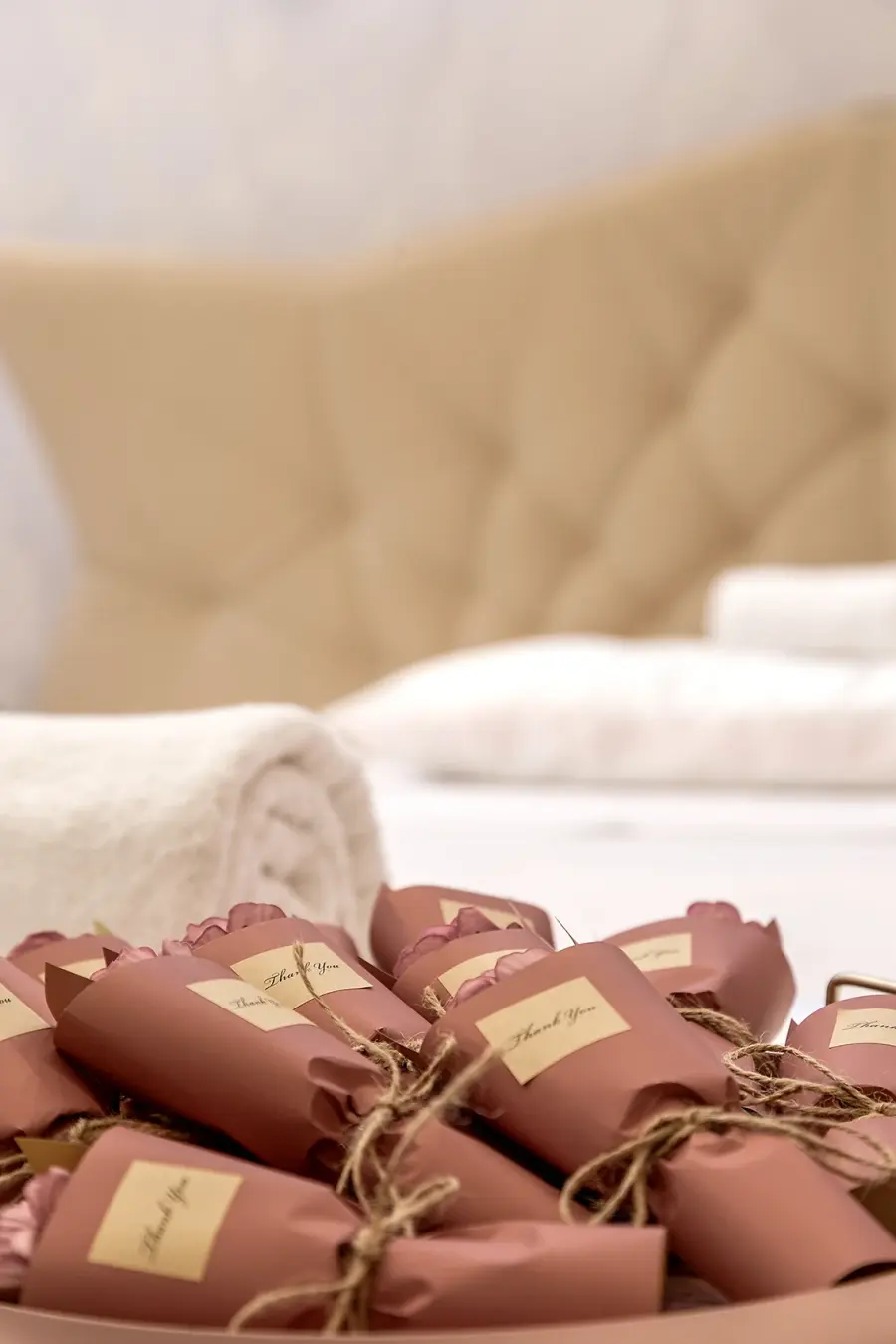
- Drink some water. After your ritual there is time for a shower and a drink, and a small gift to take home. Keep a glass of water nearby that evening too.
- Keep the evening slow. If you can, avoid a difficult meeting or a late night straight afterwards. Walk rather than rush.
- Eat something light, and let the screens go dark a little earlier than usual.
- Go to bed early if you feel drowsy. There is no need to fight it.
The next morning, try three slow breaths before you open your laptop. It is a small way of keeping the pause going.
If your weeks have been loud, More attention is the long version of this pause: 160 minutes, €370 (150 000 Ft), from an aromatic bath to face and feet treatments. If this is your first visit, First expression — 100 minutes, €250 (100 000 Ft) — is a gentler introduction that begins with a warm shower ritual. Both are described on our rituals page. Write to us when you are ready; there is no need to rush the choice.
Questions
How often should I book a massage?
There is no rule, and we would rather not invent one. Some people like a regular rhythm, such as once a month; others save a ritual for the end of a demanding project or a change of season. Choose a pace that suits your time and budget. A ritual you can keep tends to feel more restful than a plan that turns into another obligation.
Can massage replace therapy or medical treatment?
No. Massage is not a medical treatment or a form of therapy, and it is not a substitute for medical or psychological care. It can be a pleasant, restful pause alongside the care you receive, never instead of it. If you have been struggling to cope, sleeping badly or feeling low for weeks, please speak to a doctor, a psychologist or a counsellor.
Is it fine to come after a workout?
Usually, yes. Give yourself time to cool down and have something to drink before you arrive. A shower is part of every visit, so you can come straight from training. Mention any soreness at the consultation so your therapist can adjust the pressure. Our rituals are for relaxation rather than sports recovery; with an injury, see a physiotherapist or doctor first.
What if I have a health condition?
Tell us when you book and again at the consultation, even if it seems minor. If you are unsure whether massage suits you right now — for example during pregnancy, after surgery or an injury, or with a heart or skin condition — please ask your doctor first. If you feel unwell on the day, let us know as early as possible.