Why touch matters: who sensual massage is for — and when it isn’t
On a quiet human need — and an honest look at who a sensual ritual suits, and who should wait.
The COHEN team·7 min read·
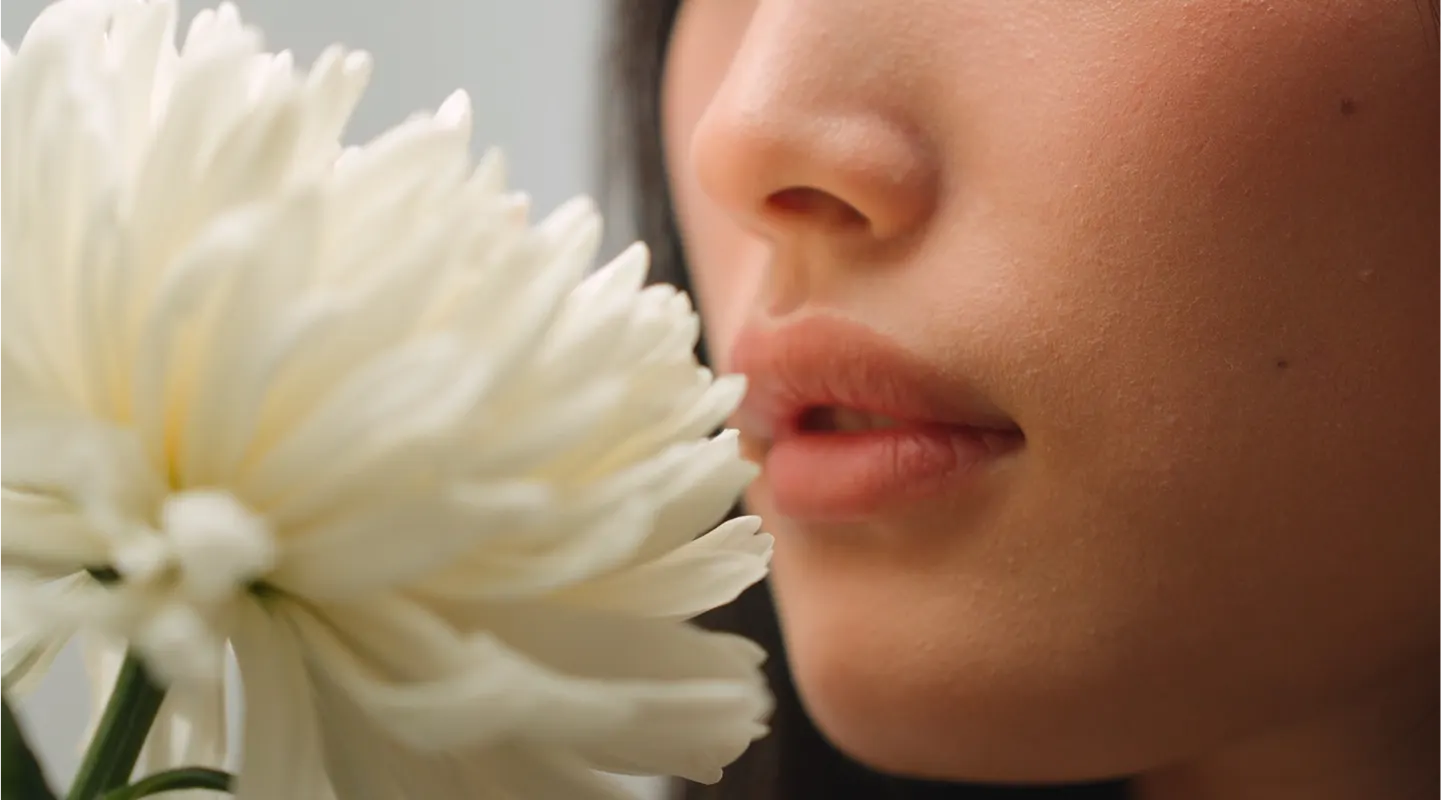
A white chrysanthemum held close to a face in soft natural light
Questions
Is it normal to feel nervous or embarrassed?
Entirely. Many people feel a little nervous before a first visit, especially if they have never had a sensual massage. Mention it during the short consultation; it helps your therapist choose a gentle pace. During the ritual there is nothing to say and nothing to get right, and you can ask for a pause whenever you need one.
Can I come if I have a health condition?
It depends on the condition, so please ask your doctor first. If they see no reason to wait, mention anything relevant when you book and again during the short consultation, so your therapist can adapt the ritual or avoid certain areas. If you are unwell on the day, let us know as early as possible. Massage is not a substitute for medical or psychological care.
Are women and all genders welcome?
Yes. Women, men and people of every gender are welcome, and so are all orientations. Couples are welcome too, and the couple’s ritual is designed for two. The only conditions are the house rules that apply to everyone: guests must be 18 or over and sober, and visits are by appointment only.
How discreet is a visit?
Discretion shapes the whole visit. COHEN is a private spa that works by appointment only, with no walk-ins. Booking requests are handled by WhatsApp or phone, and the entry details are sent to you on WhatsApp. You will find the rest of the house rules, from arrival times to sobriety, on our etiquette page.
Touch matters because it is a basic human need, as old as being held, and one that many adults quietly go without. Sensual massage offers attentive, unhurried touch to adults who want to slow down — but it is not right for everyone, or for every moment.
This article looks at both sides honestly: why touch and attention matter, who tends to enjoy a sensual ritual, when it is wiser to wait, and how consent, discretion and simple communication help a visit feel calm.
It is written for anyone who is curious but unsure, which is how many people begin.
01Touch is a basic human need
Long before we have words, we are held. The need for touch does not fade with age; it simply becomes less visible. Touch is a language without words: a hand on the shoulder can say more than a long sentence.
Adult life offers plenty of contact and very little care: a handshake, a crowded tram, a brush of shoulders in a queue. What many people miss, often without naming it, is slow, attentive touch from someone whose only task in that moment is to pay attention.
When people do receive it, they tend to describe it in simple words. Quieter. Warmer. Lighter in the shoulders. As if someone had turned down the volume of the day. Some put it this way: it was the first hour in a long time in which they thought of nothing at all.
Often the absence is only noticed when it ends: a hand resting on the back for a few seconds, still and warm, and something quietly lets go.
We will leave physiology to doctors. Massage is not a substitute for medical or psychological care, and we make no medical claims for it. What it can be is a pause — and for many people, a pause is exactly what has been missing.
02Presence: why attention matters more than technique
Technique can be learnt. Attention has to be given, every time, and it begins with leaving the rest of the day outside the door.
You can feel the difference within a minute. A hand that is following a routine simply moves on. A hand that is listening notices that you are holding your breath, that one shoulder sits higher than the other, that you soften when the pace slows — and it adjusts. That responsiveness is what turns a massage into the experience of being looked after. An attentive therapist does not hurry to the next stroke, and does not rush to fill the silence.
Presence runs both ways. A ritual asks very little of you: no conversation, no performance, nothing to get right. Phone on silent, eyes closed if you like. The more fully you arrive, the more there is to feel.
This is also why slowness matters. A slow pace leaves room for attention. Rushed touch, however skilled, can feel like something being done to you. Unhurried touch feels like time being given to you — time that is yours alone.
03Who tends to enjoy sensual massage
There is no typical guest. There are, however, a few situations in which people often find a sensual ritual meaningful.
Busy minds. People whose days are filled with screens, decisions and other people’s needs, and who find it hard to switch off even on holiday.
The curious. Those drawn to mindful touch, perhaps after yoga or meditation, or simply wondering what an hour of undivided attention feels like.
Anyone who wants to feel at home in their body. After a demanding period, or simply because they rarely stop long enough to notice it.
Visitors to Budapest. Travellers who want an unhurried hour of their own between meetings, or after a long day of walking the city.
Couples. Partners who would like to slow down together and share the same calm. Our couple’s ritual is designed for two.
You do not need experience, a particular kind of body or the right words. All genders and orientations are welcome, and every ritual is for adults aged 18 and over. Curiosity and a willingness to slow down are enough.
It is also fine not to know exactly why it appeals. Many people only know that they have not had time for themselves in a long while.
04When it is not the right choice
Honesty helps here. A sensual ritual is not right in every situation, and it is kinder to wait than to come at the wrong moment. We would rather see you on another day, when everything is in place.
If you are unwell. A cold, a fever or a day when you feel run-down: let us know as early as possible and choose another day.
If you have been drinking or have taken anything. We welcome sober guests only.
If you have a recent injury or a medical condition. Ask your doctor first, and mention it before the ritual begins.
If you are under 18. Our rituals are for adults only.
If you are hoping for something the studio does not offer. Read what a ritual includes and, if anything is unclear, ask before you book. A visit built on a different expectation rarely feels right.
The same applies to heavier times. During grief, a break-up or anything that still feels raw, touch can comfort, but it can also feel like too much. Listen to that. A massage can be a kind pause; it is not a substitute for psychological care, and talking to a professional may be the better first step.
05Why it still feels taboo — and how discretion and clear etiquette help
Even people who are at ease in spas can feel awkward about sensual massage. Part of that is history: touch between adults who are not partners has long been surrounded by assumptions. Part of it is language. Words like “sensual” and “erotic” are used loosely online, adverts often objectify, and it can be hard to tell what a place actually offers. Our guide to sensual, tantric and erotic massage untangles the terms.
Much of the unease comes from not knowing: what will happen, what to say, whether you will be judged for being curious. That uncertainty is understandable, and nothing to be ashamed of.
Two things help. The first is discretion. COHEN works by appointment only, with no walk-ins, and the entry details are sent to you on WhatsApp. The second is clear etiquette. When the house rules are written down — adults only, sober guests only, arrival no earlier than ten minutes before your time — nobody has to guess, and nobody has to feel exposed for asking. Ours are on the etiquette page.
It can also help to think of a visit the way you would think of any other appointment you keep for yourself: booked ahead, kept private and nobody else’s business.
Curiosity about touch is ordinary. When it is spoken about calmly and in plain words, the taboo loses much of its weight.
06Feeling safe: consent, boundaries and simple communication
Feeling safe is not a feature of a room. It comes from the way people behave with each other in it.
Consent is continuous. Agreeing to a ritual does not mean agreeing to everything in advance, and you can change your mind at any point. Therapists have boundaries too, and a good ritual respects both sides.
Communication can be very simple. Before the ritual, a short consultation covers how you feel, anything you would like to avoid and the pace you prefer. During it, a few words are enough:
“A little slower, please.”
“Lighter there.”
“Could we pause for a moment?”
Saying “lighter” is no more awkward than asking for a glass of water. Feedback is part of the ritual, not an interruption of it. It works the other way round too: if a pace or a pressure feels just right, you can say that as well.
Silence is equally welcome. Your therapist leads, so you can keep your eyes closed and stop managing anything at all.
If you would like to feel what unhurried, attentive touch is like, First expression is the ritual we suggest for a first visit: 100 minutes that begin with a warm shower ritual and close with a face and head massage. You will find it, alongside the other rituals, on our rituals page. Come when the time feels right.